How to stock up on food sensibly (without panic buying)
A calm guide to building a food stockpile in the UK, a few items at a time, so you have enough for a power cut or a week at home.
Independent guide. UK Be Ready is an independent website. It is not affiliated with, endorsed by or part of the UK Government, GOV.UK or the official Be Ready campaign. For official guidance visit beready.campaign.gov.uk.
Five rules for a sensible food stockpile
- Buy what you already eat. A stockpile you never eat is wasted money. Choose versions of your normal meals.
- Go no-cook first. In a power cut you may not be able to cook. Prioritise food that is safe to eat cold.
- Build it gradually. Two or three extra items per shop builds a week's supply within a month without emptying shelves.
- Rotate: first in, first out. Put new items at the back and use the oldest first.
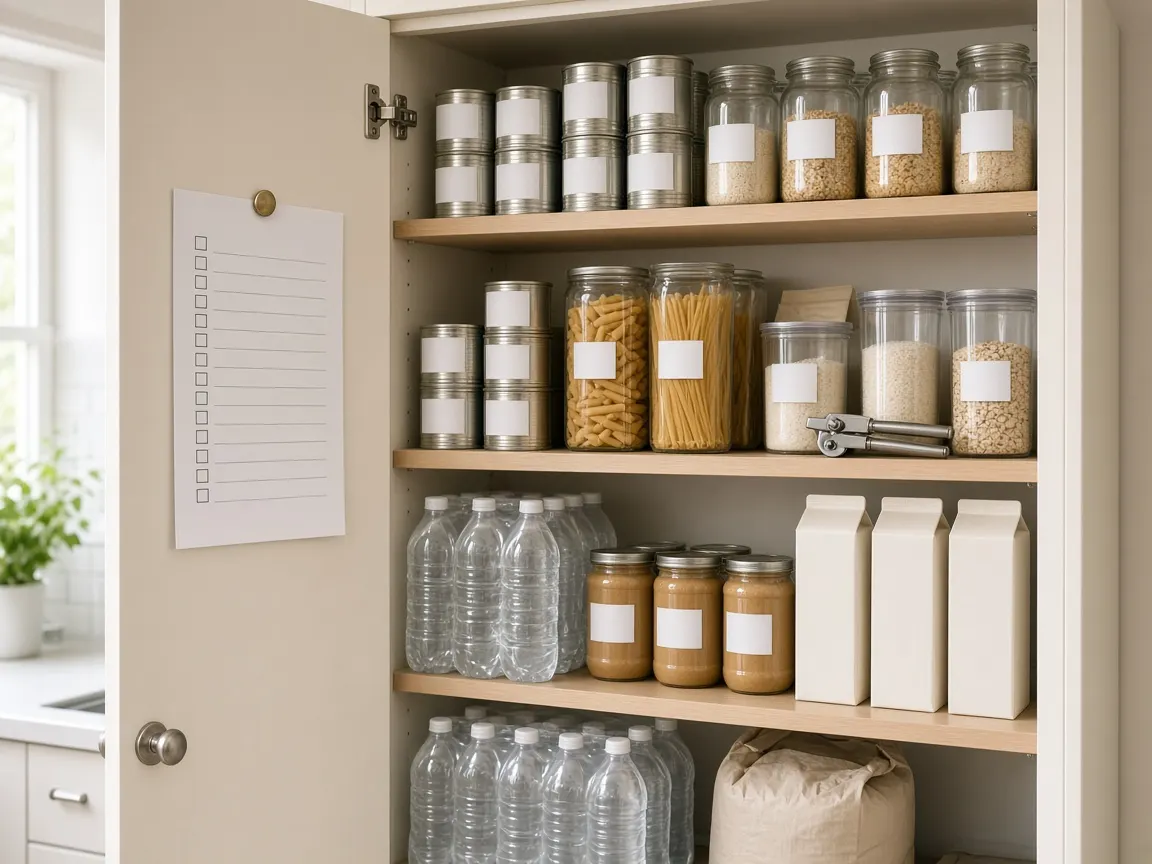
- Don't forget the extras. Manual tin opener, water, baby formula, pet food and any special diets.
What to stock (no-cook focus)
- Tinned fish and meat (tuna, salmon, chicken, corned beef)
- Tinned beans, lentils and chickpeas
- Tinned vegetables, fruit and soups (many are fine cold)
- Crackers, oatcakes, crispbreads, cereal and cereal bars
- Peanut or other nut butters, dried fruit and nuts
- UHT milk or plant milk cartons, long-life juice
- Ready-to-eat pouches (rice, pasta, porridge)
- Treats: chocolate, biscuits, tea and coffee for when you can boil water
Want a shopping list with quantities? Our partner buying guide has a 7-day food stockpile shopping list.
Frequently asked questions
How do I stock up on food without panic buying?
Add a few extra long-life items to each regular shop, choose foods you already eat, and rotate them by eating the oldest first. Building a stockpile gradually over a few weeks avoids empty shelves and spreads the cost.
What food should I stockpile in the UK?
Choose long-life foods that need no fridge and little or no cooking: tinned fish, meat, beans, vegetables and fruit, soups, crackers, oatcakes, nut butters, dried fruit and nuts, cereal bars, UHT milk and ready-to-eat pouches.
How much water should I store?
UK Government guidance is 3 litres per person per day for drinking, so 9 litres per person for 3 days or 21 litres for a week. You need more for cooking and washing.
How long does a food stockpile last?
Most tins last 1–2 years or more, and dried foods months to years; check best-before dates. Use a first-in, first-out system so nothing goes out of date.
Updated 2026-10-28. Source: UK Government Be Ready checklist.